
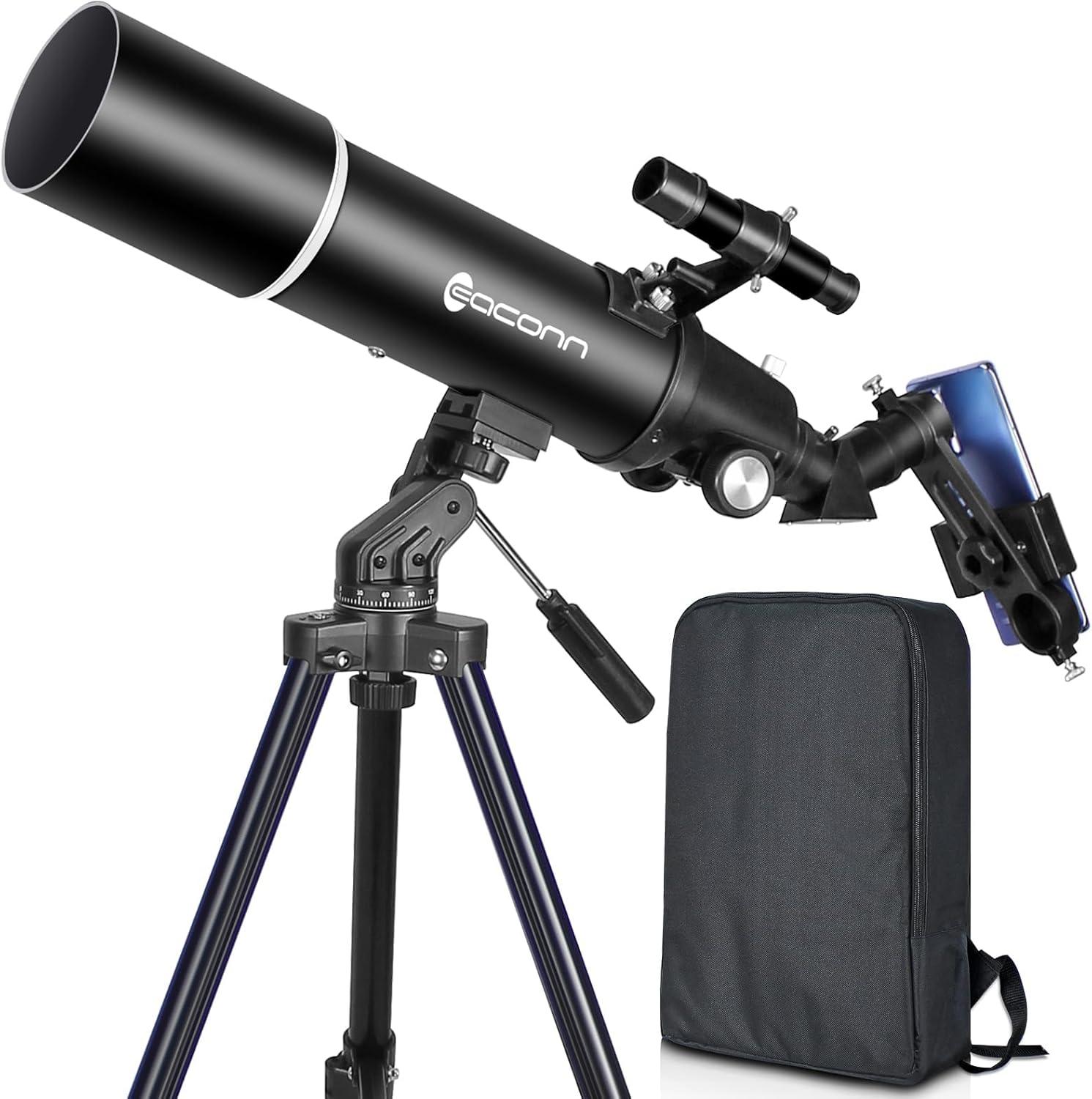


We like to think of stargazing as something you don’t need a PhD to enjoy-just the right gear and a little patience. So when the “telescopes for Adults Astronomy, 80mm Aperture 600mm Refractor Telescope for Kids & Beginners, Compact and Portable Travel Telescopio wiht Backpack” landed on our doorstep, we treated it like a weekend field trip: backyard setup one evening, a short road trip to darker skies the next. From unboxing to our first moon-lit session, this review is based on those hands-on hours under the sky.
On paper the telescope promises a lot: a true 80mm aperture with fully coated green optics, a 600mm focal length, a rough adjustment and positioning gimbal with scale, two eyepieces (K20mm and K9mm) for roughly 30x-66x magnification, a 5×24 finder scope, and a custom mobile phone adapter. It also arrives as a ”complete kit”-tripod, carrying backpack, manual and video instructions-so we where eager to see how those features translate to real use: clarity and contrast, stability, ease of aiming and focusing, portability, and how well the phone adapter and included accessories actually work in the field.
In this post we’ll walk through our first impressions and detailed tests: how straightforward the assembly proved for beginners,how the gimbal and mount handled fine positioning,what the optics delivered on the moon and bright planets,and whether this model makes a practical gift for curious kids or traveling hobbyists. we’ll call out strengths, limitations, and who we think will get the most from this little travel refractor-so you can decide if itS the right starter scope for your next night under the stars.
Our Overview of This Compact Travel Refractor Telescope
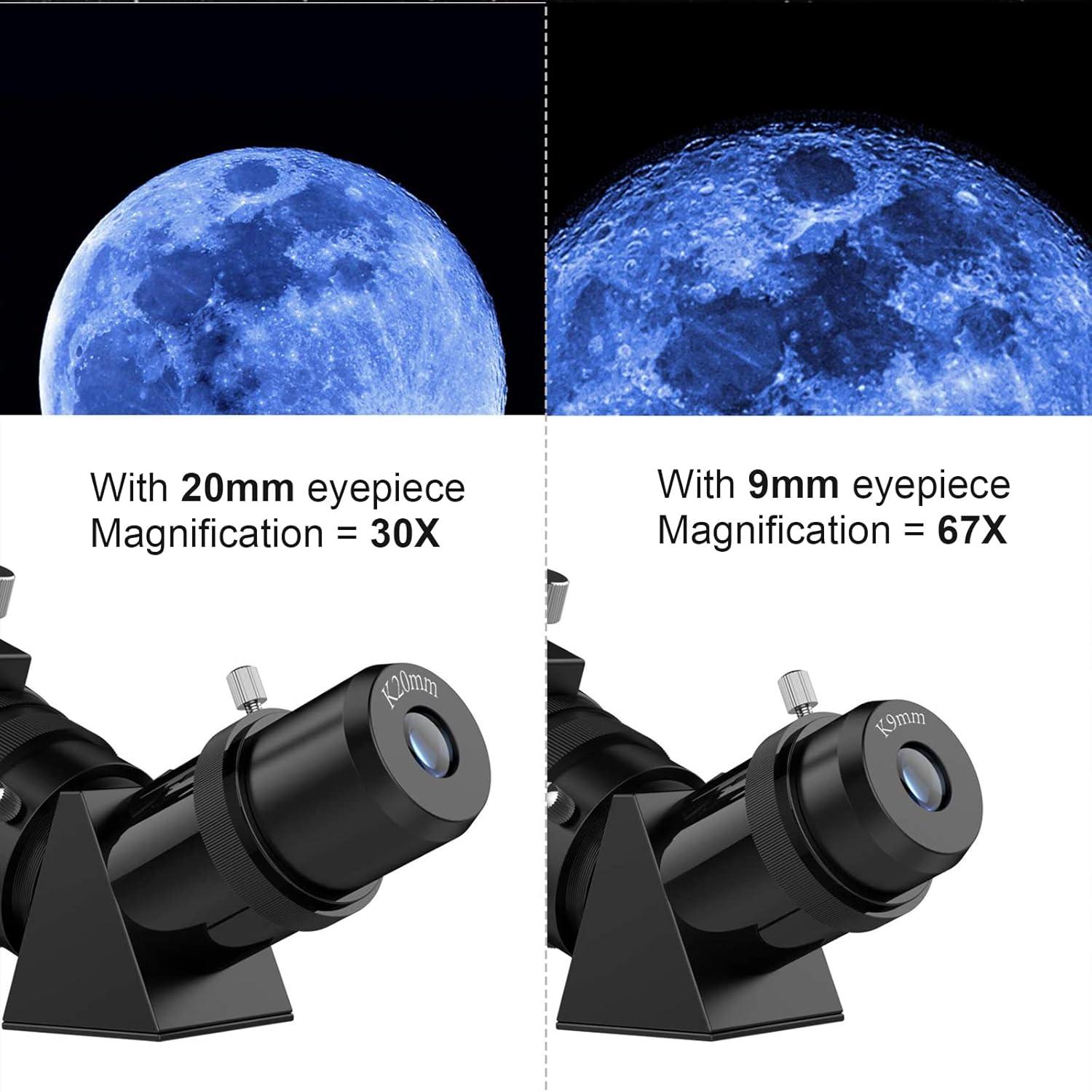
We found the optical performance remarkable for a travel-sized instrument: the 80mm aperture paired with fully coated green optics pulls in plenty of light, producing brighter, clearer views of the Moon and brighter planets. Pointing is intuitive thanks to the rough adjustment and positioning gimbal with scale, which makes altitude and azimuth changes smooth and repeatable – ideal when we want to track a target without fuss. The kit arrives well thought out, with two eyepieces (K20mm and K9mm) offering roughly 30×-66× magnification, a 5×24 finder scope with crosshair for quick alignment, and a customized mobile phone adapter that fits the two eyepiece positions and uses clear lettering for fast setup.
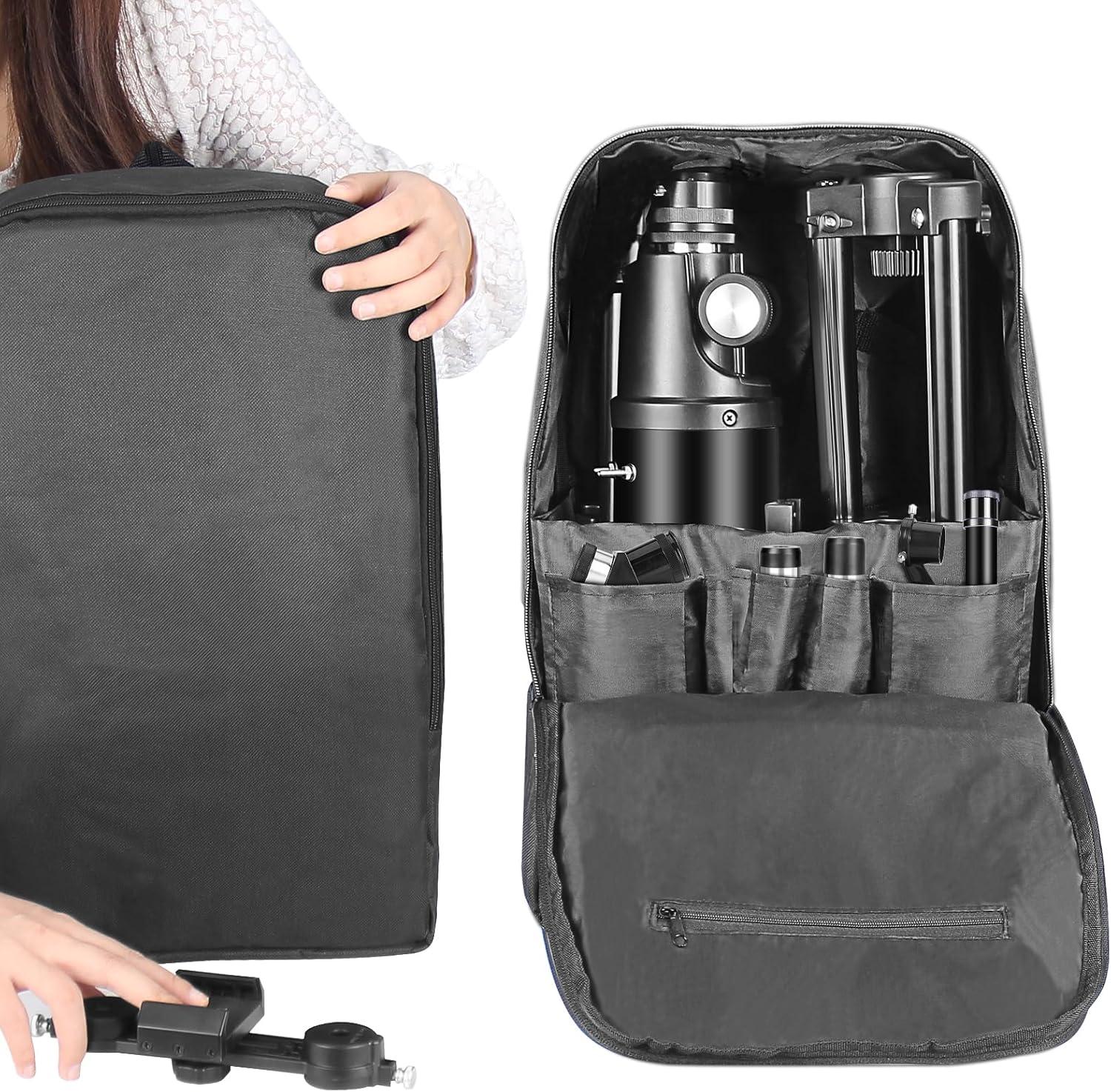
Assembly and portability are where this design really shines for on-the-go observing: the adjustable tripod and dedicated carrying backpack let us pack everything away neatly,and the included manual plus video guide make setup accessible even for beginners and kids. We often pack it for moon nights, backyard planet sessions, and short birding or landscape trips – it’s light enough to carry and rugged enough for family use. Key practical points we appreciated include:
- Easy assembly with clear instructions
- Complete accessory set (eyepieces,finder,phone adapter)
- Portable storage with backpack and tripod
| Eyepiece | Approx. Magnification |
|---|---|
| K20mm | ~30× |
| K9mm | ~66× |
See Current Price & Order Yours
What We Noticed about the Optics Portability and Included Accessories
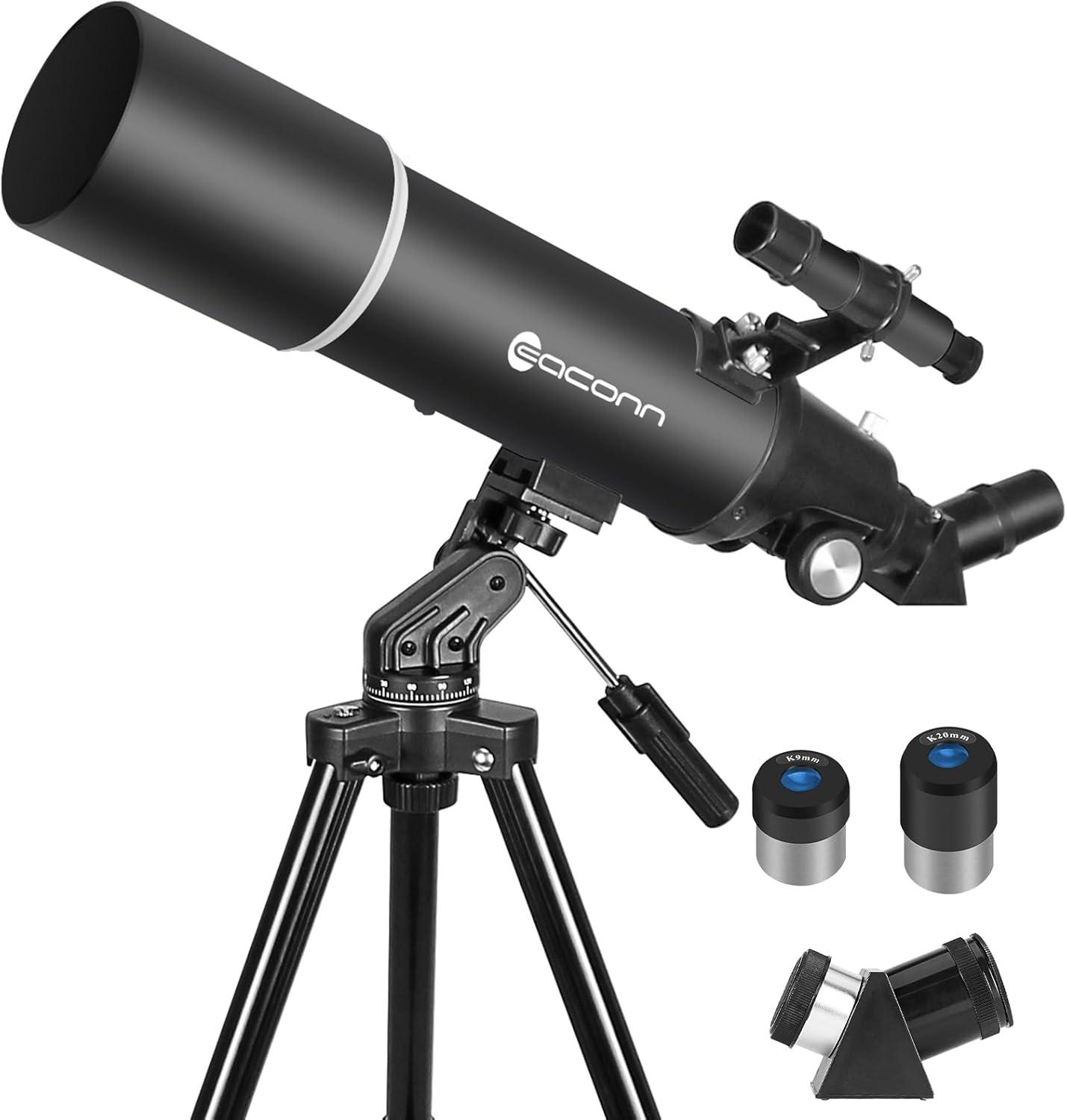
We noticed right away that the 80mm aperture paired with the fully coated green optics glass lens makes a tangible difference in brightness and clarity – dim lunar details and planetary edges look noticeably cleaner than with smaller beginner scopes. The built-in rough adjustment and positioning gimbal with scale turned out to be a real convenience: we coudl tweak altitude and azimuth smoothly and comfortably, which made locating and tracking targets less fiddly during short observation sessions. Included in our quick checklist of optical highlights were:
- 80mm aperture for greater light gathering
- Fully coated optics to reduce reflections and boost transmission
- Rough adjustment gimbal with scale for easy pointing
These elements combined to give us bright, usable views without constant finagling of the tube.
Portability and accessories are where the package really shines for on-the-go observing: assembly was straightforward thanks to the clear manual and video instructions, and everything stows neatly into the carrying backpack along with the adjustable tripod, so we could take the setup to darker skies without fuss. The kit comes ready to use with two eyepieces (K20mm and K9mm delivering roughly 30x-66x magnification),a 5×24 finder scope with crosshair,and a customized mobile phone adapter that clips to the K20/K9 positions (labeled for quick alignment). That combination made casual astrophotography and family sky sessions simple and repeatable. Quick specs at a glance:
| Feature | Value |
|---|---|
| Aperture | 80 mm |
| Focal Length | 600 mm |
| Magnification | 30x-66x (K20/K9) |
| Finder | 5×24 crosshair |
| Carry | Backpack + tripod |
Ready to see for yourself? Check it out on Amazon
Hands On Insights and Our Recommendations for Beginners and Aspiring Amateur Astronomers
We found the views pleasantly surprising given the compact footprint-the 80mm aperture with fully coated green optics noticeably brightens moon craters and planetary details, while the 600mm focal length keeps images crisp at higher powers. Pointing was simple thanks to the rough adjustment and the positioning gimbal with scale; small, intentional nudges in altitude and azimuth make tracking less fiddly than expected. The included 5×24 finder scope with crosshair and the pair of eyepieces (K20mm and K9mm) cover the basic 30x-66x magnification range you’ll use most, and the custom mobile phone adapter-with marked end positions for each eyepiece-made quick astrophotography attempts far less frustrating. Assembly was straightforward using the manual and video guide, and packing everything into the adjustable tripod and backpack felt effortless for short trips. Quick hands-on tips:
- Start with the K20mm (low power) to locate objects, then swap to the K9mm for detail.
- Use the finder crosshair first – it saves time and frustration on alignment.
- Secure the gimbal scale before imaging to reduce drift during long looks.
- Store eyepieces in the backpack to protect the fully coated optics when traveling.
For beginners and aspiring amateur astronomers we recommend this setup as a travel-ready starter instrument: it balances portability and optical performance without overwhelming new users. It’s ideal for lunar sessions, planetary observing, birdwatching and landscape work, and makes a solid learning platform before upgrading to larger apertures. Below is a short specs snapshot to help you compare at a glance:
| Feature | Value |
|---|---|
| Aperture | 80 mm |
| Focal Length | 600 mm |
| Magnification | 30× – 66× |
| Finder | 5×24 crosshair |
| In the Bag | 2 eyepieces, phone adapter, tripod, backpack |
If you’re just starting out, we advise practicing alignment during twilight and bringing the backpack for quick setup at dark-sky spots. Ready to take the next step? Check current price and order on Amazon
Pros & Cons
Pros & Cons
After spending time under the sky with the 80mm travel refractor,we came away with a clear sense of what it does well and where it shows its beginner-amiable compromises. Below is our concise take – practical, honest, and written from the point of view of people who like their stargazing portable and fuss-free.
Pros
- Bright 80mm aperture: The true 80mm lens and fully coated green optics deliver noticeably brighter,clearer views of the Moon and planets than toy scopes.
- Useable magnifications: The included K20mm and K9mm eyepieces give the promised ~30x and ~66x on a 600mm focal length – plenty for beginner planetary viewing.
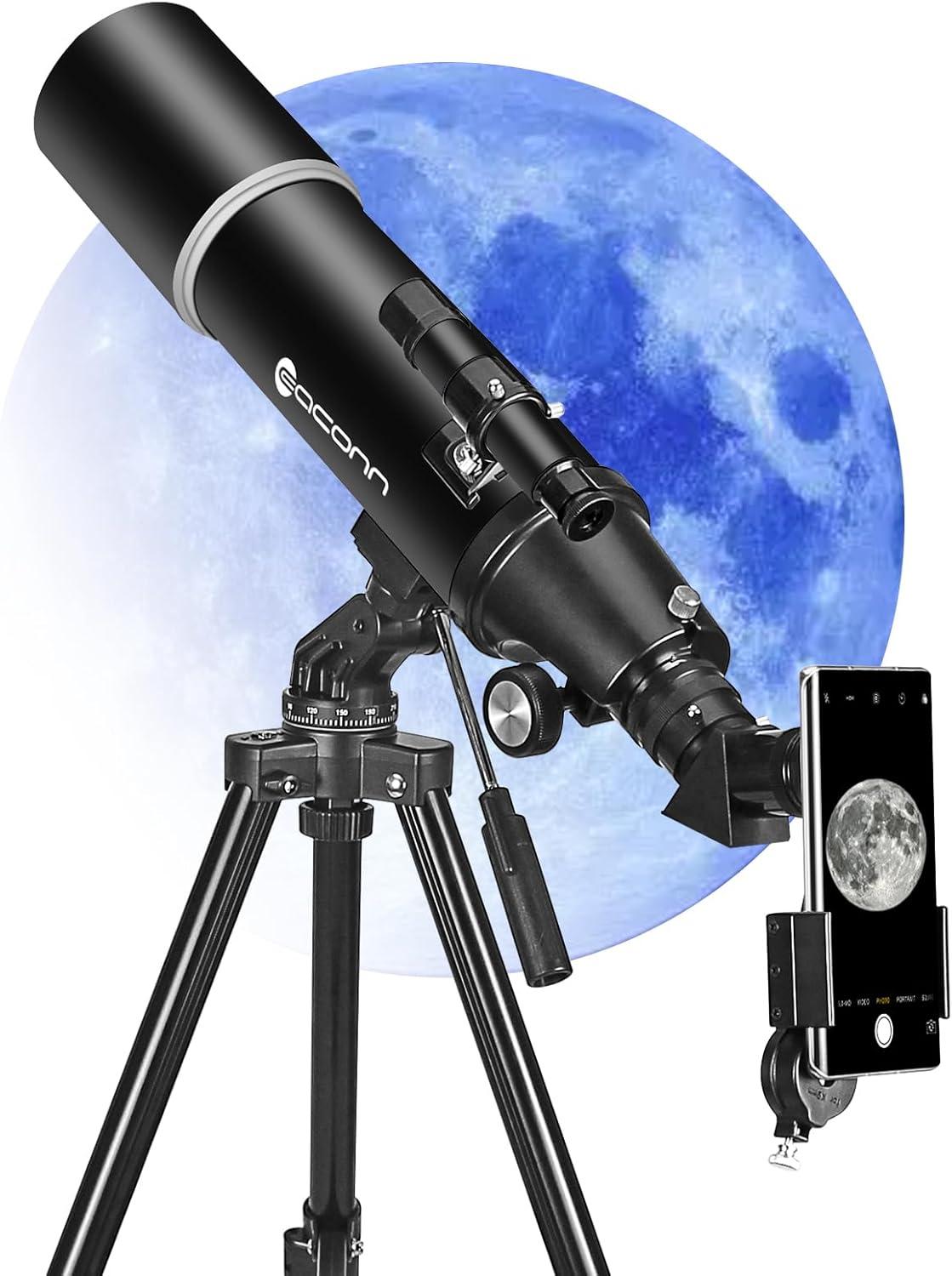
- Ready-to-go accessory kit: Finder scope, phone adapter, two eyepieces, adjustable tripod and a backpack – everything packs up and travels with you.
- Rough-adjust gimbal with scale: Makes aiming intuitive and pleasant, especially when teaching kids how to sweep the sky.
- Very portable: Lightweight, compact and backpack-friendly – ideal for roadside stargazing and family trips.
- Good learning curve: Easy assembly, clear manual and video guides mean beginners and kids can get observing quickly.
- Great gift potential: Feels substantial as a present – useful for moon parties, backyard sessions and daytime birding too.
Cons
- Limited deep‑sky capability: An 80mm refractor is not optimal for faint galaxies and nebulae – we saw strong results on the moon and bright planets, but dim objects were underwhelming.
- No motorized tracking or fine slow‑motion controls: The rough‑adjust gimbal is handy, but long observers will miss precise tracking for higher magnifications or astrophotography.
- Tripod stability: The included tripod is lightweight and can wobble at higher magnifications or in breezy conditions.
- Accessory quality is basic: Eyepieces and the small 5×24 finder are functional but not premium – expect some softness toward the edge of the field.
- Phone adapter alignment takes patience: It effectively works,but centering a planet or the Moon frequently enough required fiddling to get a stable frame.
- Possible color fringing: Like many small refractors, bright objects may show slight chromatic aberration; not a dealbreaker for casual use.
Quick Snapshot
| Feature | Our Note |
|---|---|
| Portability | Excellent – backpack-ready for travel |
| Accessories | Very complete for beginners |
| Observing Power | Strong for Moon & planets; limited for faint deep-sky |
| Stability | Fair – tripod can be wobbly at higher magnifications |
Bottom line: We think this 80mm travel telescope is an excellent starter instrument – especially for families and travelers who want one package that’s portable, easy to use, and ready out of the box. Hobbyists chasing deep-sky detail or high-resolution planetary imaging will likely want to step up to a larger, sturdier rig.
Q&A
Q: What did we actually test?
A: We spent evenings under suburban skies with the EACONN 80mm/600mm refractor-assembling it, pointing it, packing it into the included backpack, and trying simple phone photos through the eyepiece. We used both supplied eyepieces (K20mm and K9mm), the 5×24 finder, and the rough-adjust gimbal to track targets.
Q: What can you realistically see with this telescope?
A: In short: the Moon in crisp detail, the main phases and some surface features on Jupiter (cloud bands and its four Galilean moons) and the rings of Saturn on a good night, plus bright star clusters and a few brighter nebulae. It’s tuned to show bright, high-contrast objects best – deep, faint galaxies and very dim nebulae are beyond its practical reach from light-polluted areas.
Q: How much magnification do you get?
A: The scope’s 600 mm focal length gives about 30x with the K20mm eyepiece and about 66x with the K9mm (600 ÷ eyepiece focal length). Those are useful ranges for lunar and planetary viewing for beginners; pushing higher will require steadier mounts and better conditions.
Q: How are the optics?
A: The fully coated green glass objective lens and 80 mm aperture gather a respectable amount of light for an entry-level refractor. Images are bright and fairly clear for its class. Don’t expect the perfect contrast of high-end apochromatic optics, but for casual observing and travel use it performs well.
Q: Is it easy to assemble and use?
A: yes – we found assembly straightforward. There’s a printed manual and a video (which we used).The alt-az rough adjustment and positioning gimbal with scales makes pointing intuitive – that’s especially helpful when teaching kids how to find objects.
Q: How portable is it?
A: Very portable for a true 80 mm refractor.The telescope, adjustable tripod, and accessories fit into the supplied bag/backpack, making it convenient to carry to dark-sky spots or on trips. It’s designed as a travel-friendly beginner setup.
Q: How stable is the tripod and mount?
A: The adjustable tripod is adequate for casual observing. It holds steady at low-to-moderate magnifications (our 30x and 66x tests were fine), but at higher magnification you can notice vibration from wind or shaky ground. For critical high-magnification work you’d want a more robust mount.
Q: Can we use our phone to take pictures?
A: Yes – the customized mobile phone adapter is pre-indexed for the two supplied eyepieces, which makes lining up the phone fast and repeatable. Expect good, satisfying moon and bright-planet shots (think large, detailed moon photos).Don’t expect DSLR-level astrophotography or long-exposure deep-sky images; the adapter and alt-az mount are geared toward quick shots and casual sharing.
Q: What accessories are included?
A: Out of the box you get the telescope tube with coated 80 mm objective, two eyepieces (K20mm and K9mm), a 5×24 finder scope with a crosshair, the rough-adjust positioning gimbal, an adjustable tripod, a carrying bag/backpack, and the mobile phone adapter. that makes it a fairly complete starter kit.
Q: Can we upgrade eyepieces or the mount?
A: In many cases yes - beginners’ refractors generally accept standard eyepieces and accessory focusers, but confirm the barrel diameter if you plan to buy third-party eyepieces (many beginner scopes use 1.25″ eyepieces). If you want better tracking or higher stability, an upgraded mount (ideally sturdier and possibly equatorial) will improve long-exposure work and high-magnification viewing.Q: Is this telescope suitable for kids?
A: We think so. It’s pitched at beginners and older kids (around 8-12+), and the included features (simple assembly, backpack, video guide, and phone adapter) make it family-friendly. Adult supervision helps when setting up and handling optics.
Q: How should we care for it?
A: Keep lenses capped when not in use, store in the supplied bag, and use a soft brush or blower to remove dust before wiping with a lens-cleaning cloth and solution formulated for optics. Avoid touching the glass with fingers, and keep the scope dry and away from prolonged humidity.
Q: Any important limitations we should call out?
A: Yes – it’s an entry-level travel refractor, not a high-end observatory instrument. It lacks motorized tracking,heavy-duty mounting,and premium apochromatic lenses. Performance is excellent for casual observing, teaching, travel, and basic astrophotography, but it won’t replace larger or more specialized telescopes for serious deep-sky work.
Q: Is this a good value?
A: For newcomers who want a portable, ready-to-use kit with eyepieces, finder, phone adapter, tripod, and backpack, it represents a sensible, budget-conscious entry into amateur astronomy. If you’re after a travelable,family-friendly instrument to spark curiosity and capture moon shots,it’s a solid choice.If you want, we can add a brief troubleshooting mini-guide (e.g., finder alignment, common focus issues, tips for steady phone shots) based on our hands-on testing. Would that help?
Discover the Power
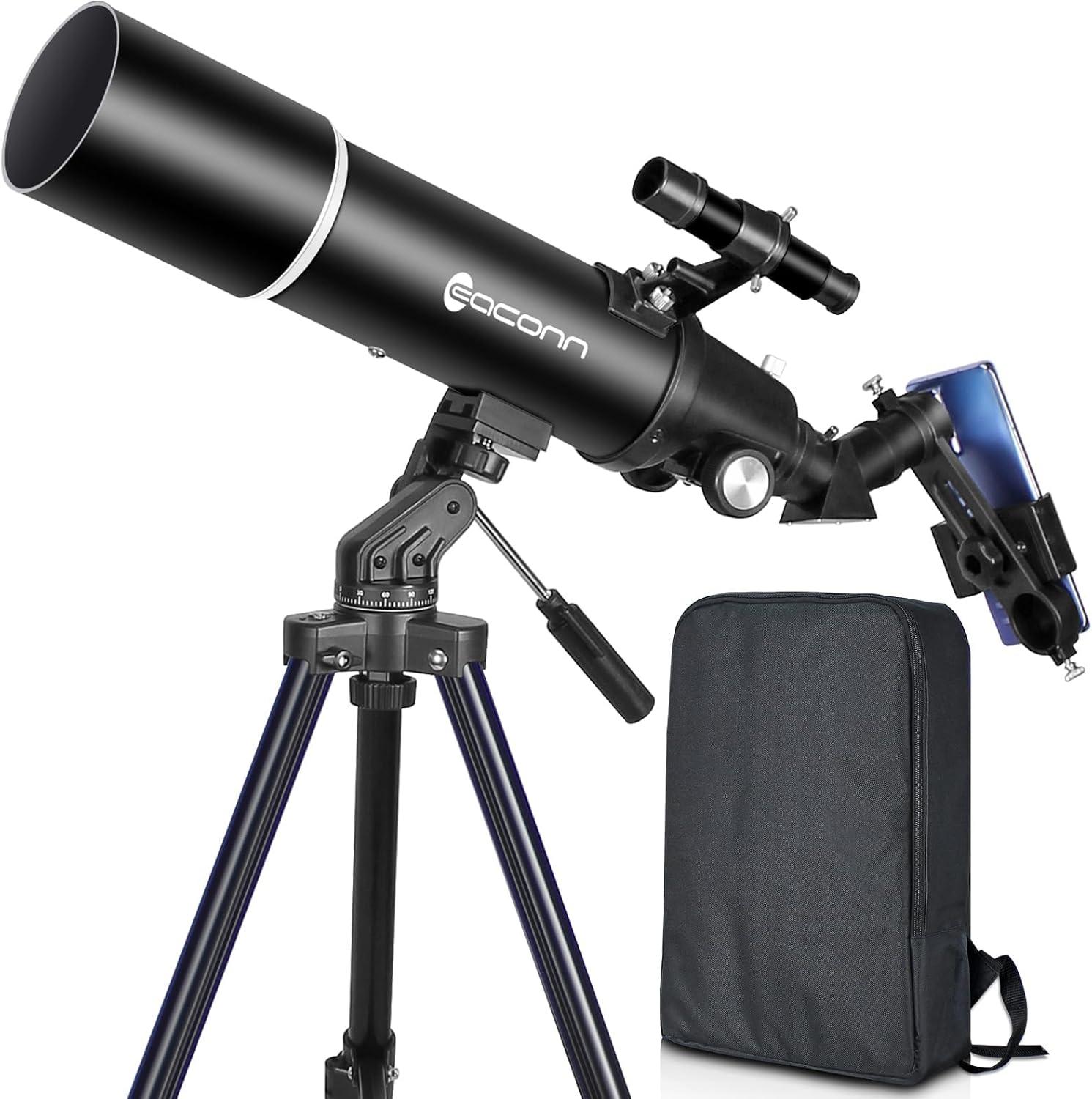
After spending time with the EACONN 80mm travel telescope, we came away impressed by how much it delivers for the price and purpose. The true 80mm aperture and fully coated optics make moon and planetary views pleasantly bright,the rough-adjustment gimbal and finder scope keep targeting straightforward,and the included K20/K9 eyepieces plus mobile phone adapter make sharing and snapping views easy.Its compact tripod, backpack, and simple assembly mean it genuinely travels-ideal for family nights, beginner stargazers, and curious kids getting their first close-ups of the night sky.
We won’t pretend it’s a professional observatory-this is a starter refractor built for accessibility and fun rather than deep-sky imaging-but for what it’s designed to do, it’s a solid, portable option. If you’re looking for a gift that gets people looking up or a no-fuss telescope to take on the road, this one deserves a spot on your shortlist.
Ready to start your evenings under the stars? See the EACONN 80mm Travel Telescope on Amazon.
Reviews
There are no reviews yet.