

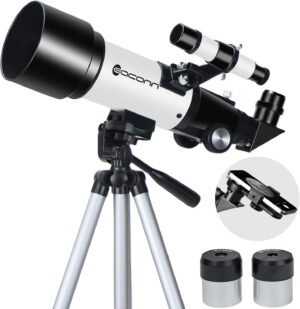
There’s something a little magical about taking a simple tube out into the yard, pointing it skyward and watching distant craters and rooftops snap into focus. That’s exactly what we did with the Telescopes, Telescope for Kids and Adults Beginners – the compact blue refractor that promises to turn ordinary evenings into mini expeditions. On paper it’s unpretentious: a 70mm objective, 400mm focal length, an AZ mount and two eyepieces. In practice it’s a portable, family-friendly setup that’s easy to carry, fast to assemble and surprisingly satisfying for casual observing.
From our first night with it we appreciated how straightforward everything was. The 12.5mm and 20mm eyepieces give usable magnifications (roughly 20x-32x), the 5×24 viewfinder with crosshairs makes finding targets less fiddly, and the fully coated 70mm lens produced clear, contrasty views of the Moon and nearby landscape features.The adjustable aluminum tripod (12-38 inches) and tool-free setup let us pop it up on the patio or take it on the road without fuss. The included phone adapter was a highlight - with a few tweaks we captured shareable images and a couple of surprisingly decent shots of the Moon. We aren’t calling this a substitute for a serious observatory instrument, but for beginners and kids it’s a friendly, well-rounded starter: portable, affordable and fun. In the rest of this review we’ll walk through optics, handling, accessories (including the phone adapter and mount), real-world performance, and whether this little travel refractor is the right choice for your family’s first steps into stargazing.
Our Overview From Backyard Stargazing to Landscape Viewing

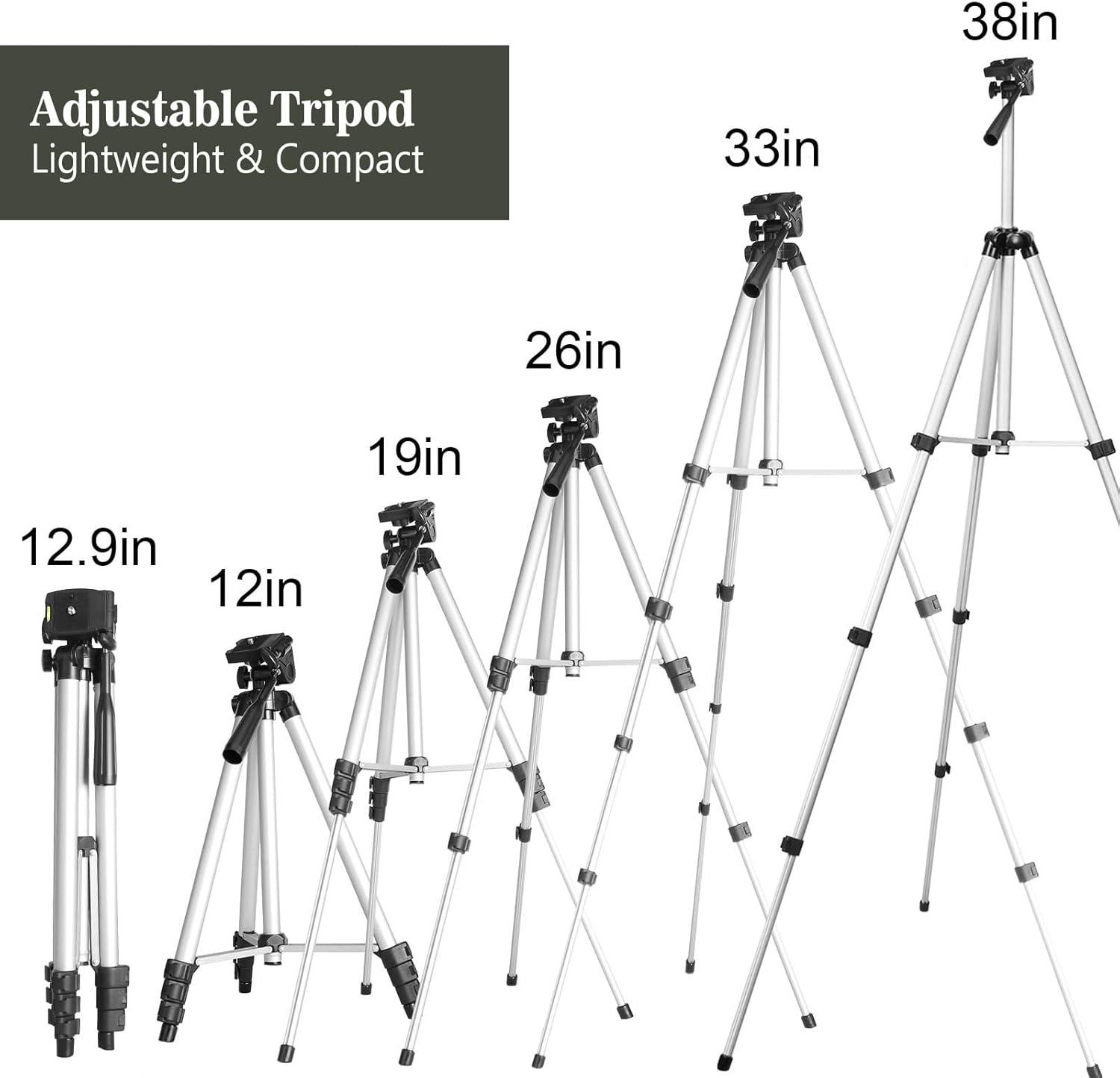
For backyard evenings and roadside lookouts alike, we found this little refractor to be a reliable bridge between casual stargazing and scenic daytime viewing. With a 70mm objective lens and 400mm focal length built from high-transmittance, fully coated glass, the images come through clear and sharp whether we train it on the Moon or a distant ridge. The kit includes two interchangeable eyepieces (12.5mm and 20mm), giving us a useful range of 20x-32x magnification</strong), and a 5×24 viewfinder with crosshairs that makes target acquisition surprisingly simple. Setup is friendly to beginners: an adjustable aluminum-alloy tripod extends from 12 to 38 inches and installs without tools, so we can move quickly from backyard to roadtrip without fuss.
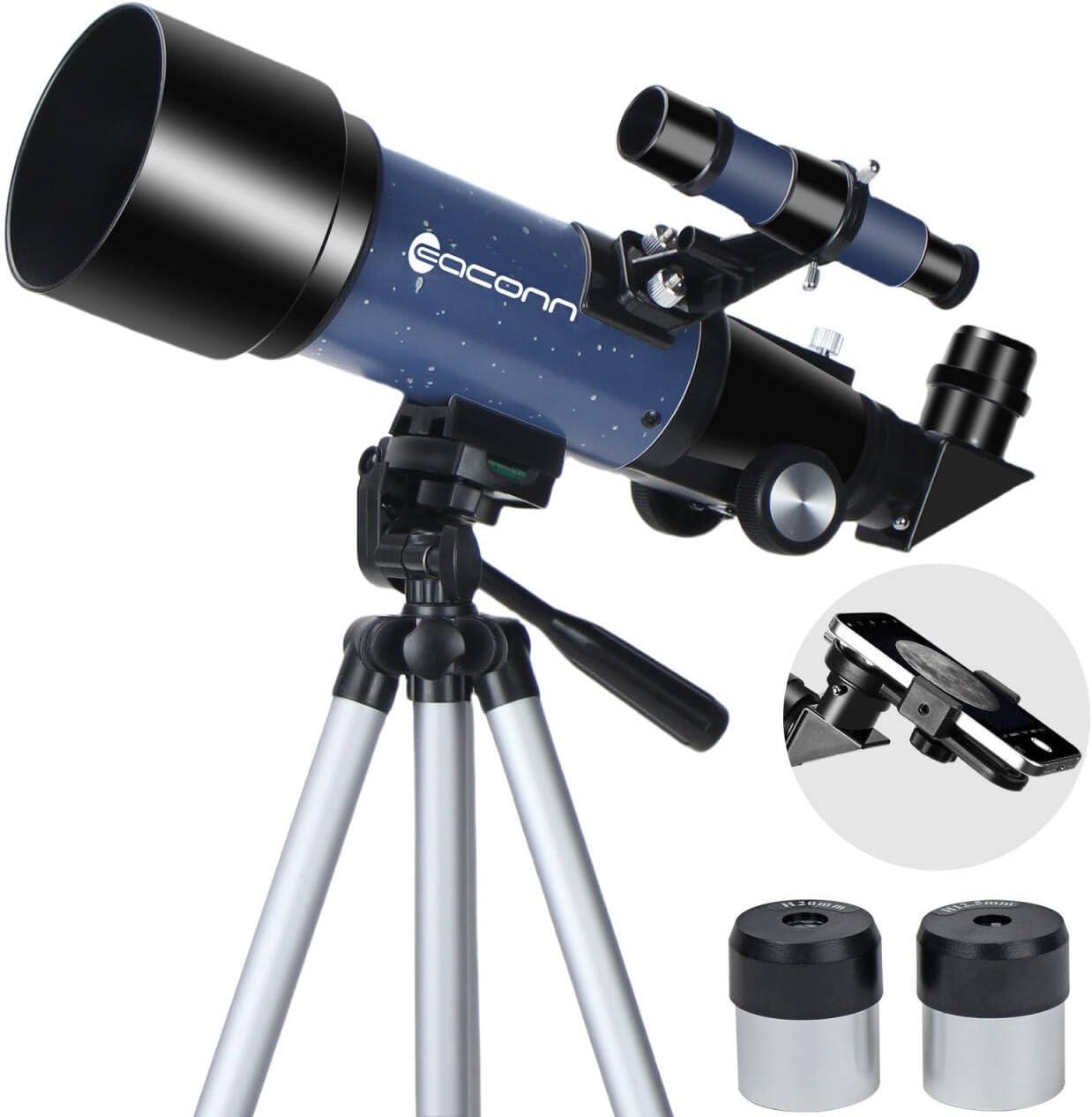
our hands-on use highlighted practical extras that matter when sharing the experience with family and friends. The custom phone adapter lets us lock in focus and capture images to send around the table,and the compact travel form encourages packing it along for landscapes as readily as lunar observing. Key takeaways:
- Optics: crisp views for both celestial and terrestrial targets
- portability: lightweight setup and adjustable tripod
- Sharing: phone adapter for easy photos
| Accessory | Benefit |
|---|---|
| 12.5mm / 20mm eyepieces | 20x-32x magnification |
| 5×24 viewfinder | Quick target alignment |
| Tripod (12-38″) | Flexible observation heights |
We appreciated how approachable this is for beginners and kids-it’s a tidy, tech-forward gift that sparks curiosity without overwhelming. Ready to bring one home and start exploring with us? Grab it here and start observing
What We Noticed About the Optics Build and Travel Friendly Mount
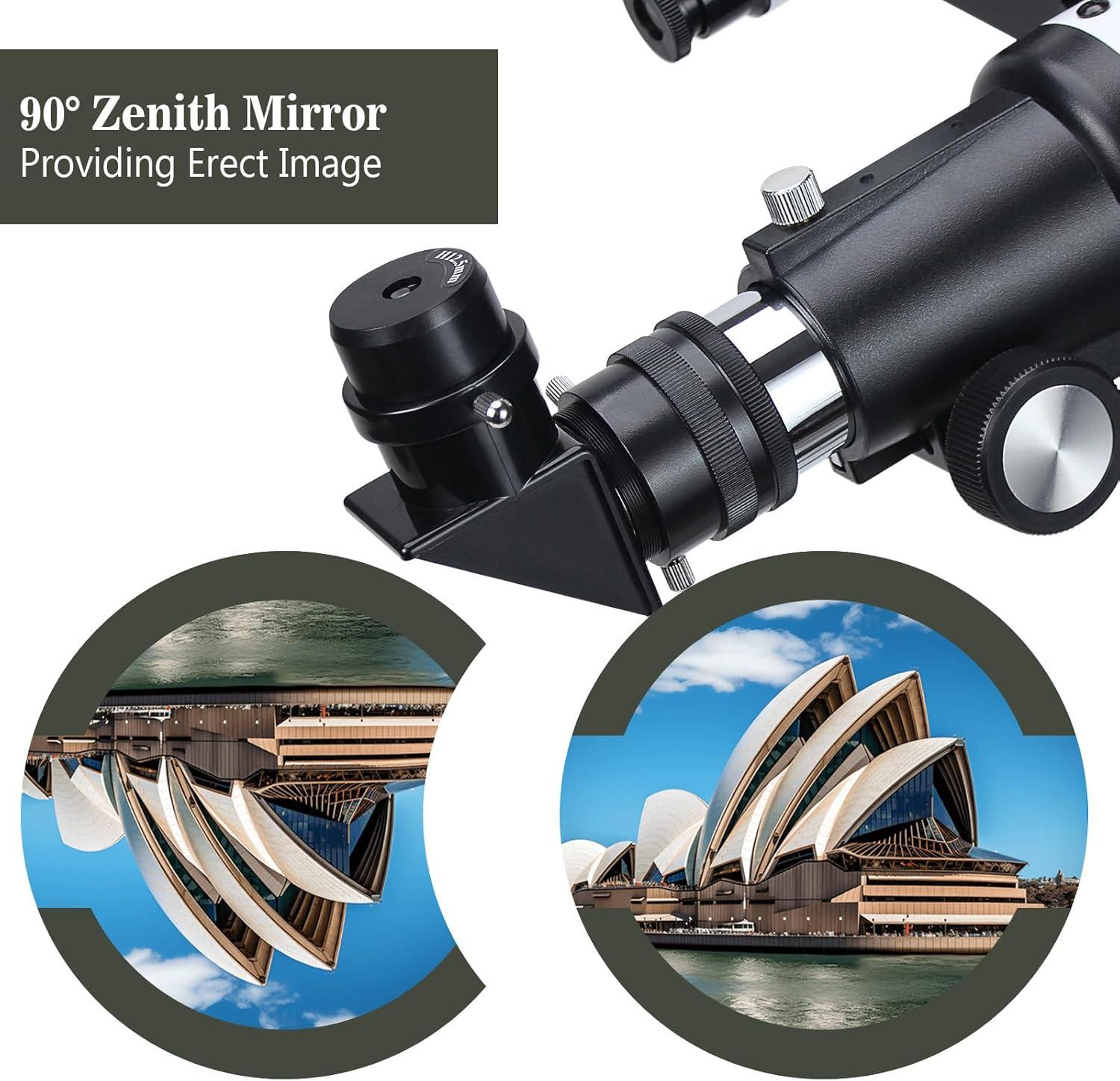
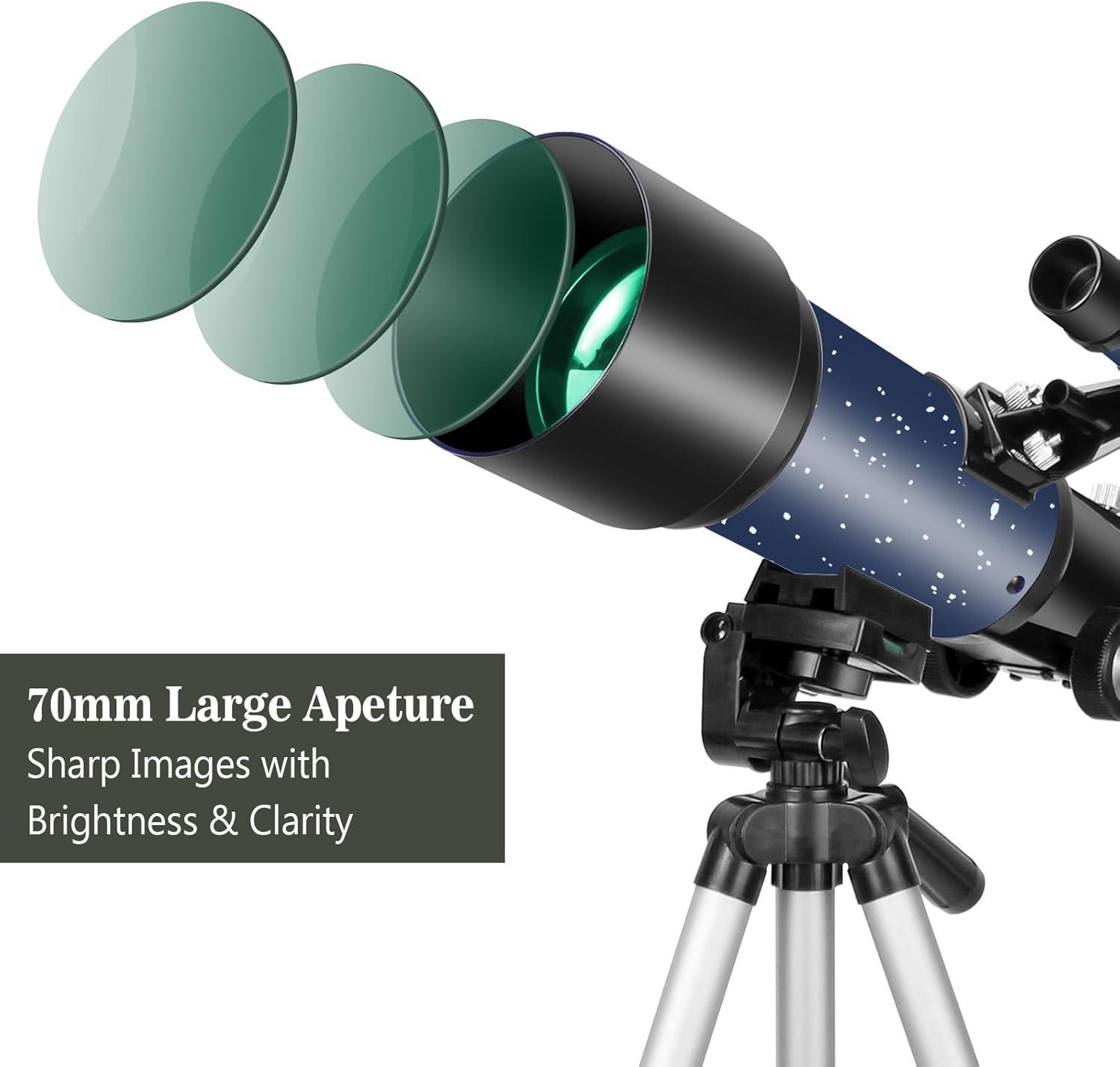
Optics and build impressed us straight away - the 70mm objective paired with a 400mm focal length and fully coated glass elements delivers clear, crisp images whether we aimed at the Moon or a distant ridge. The package of two interchangeable eyepieces (12.5mm and 20mm) gives us useful versatility: roughly 20x to 32x magnification, so stars, craters and terrestrial details resolve well without the frustration of constant refocusing. The 5×24 viewfinder with crosshairs makes target acquisition quick, and the custom phone adapter that lets us fine-tune the phone camera focus is a real plus for capturing and sharing what we see with minimal fuss.
Travel-friendly mount and usability is where this telescope really shines for casual stargazers and families. The adjustable aluminum-alloy tripod rises from about 12″ to 38″, sets up tool-free, and packs light enough for a car-top or weekend backpacking stop; in short, it balances portability with surprising stability for field use. We appreciated the straightforward assembly and how fast we could switch between sky and landscape observing, making it perfect for spontaneous outings and teaching moments with kids.
- Portable: lightweight aluminum tripod
- Quick setup: tool-free assembly
- Versatile viewing: eyepiece choices + viewfinder
- Shareable: adjustable phone adapter for photos
| Feature | Value |
|---|---|
| Aperture | 70 mm |
| focal Length | 400 mm |
| Eyepieces | 12.5 mm, 20 mm |
| Magnification | ~20x-32x |
| Tripod Height | 12″-38″ |
See current price & details on Amazon
Our Hands On Insights and Recommendations for New Stargazers and Families
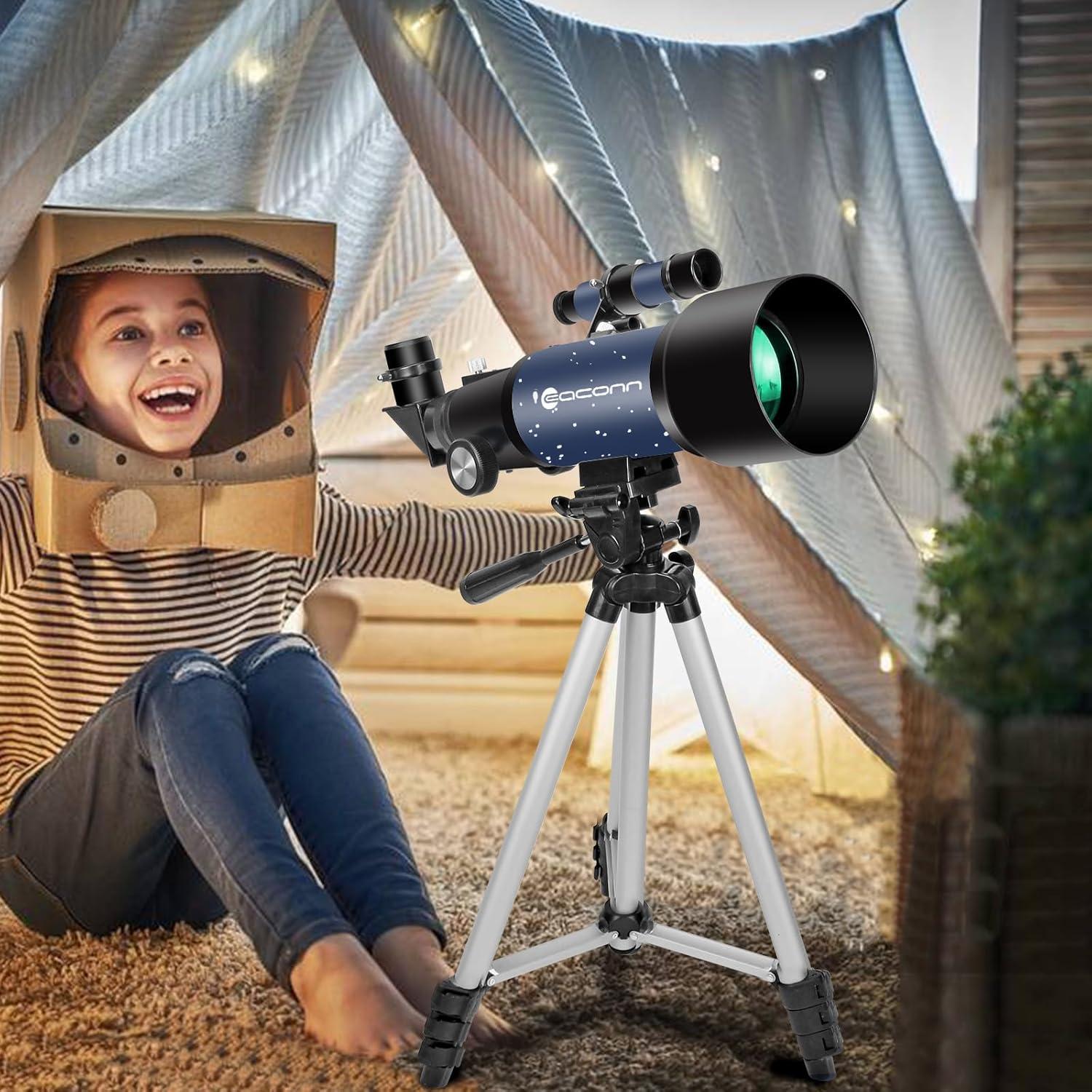
Our hands-on time showed this little refractor punches above its size for beginners and families. The 70mm objective with a 400mm focal length and fully coated glass elements delivered crisp daytime landscapes and surprisingly clear lunar views; switching between the 20mm and 12.5mm eyepieces gives us a useful 20x-32x magnification range for starters, and the 5×24 viewfinder with crosshairs made target acquisition straightforward. Setup was genuinely simple – the adjustable aluminum alloy tripod (12″-38″) locks in quickly and the custom phone adapter let us capture sharable shots after a little fine-tuning of the phone camera focus. practical tips we picked up during our sessions:
- begin with the 20mm eyepiece to locate objects, then swap to 12.5mm for close-ups of the moon.
- Align the viewfinder during daylight on a distant landmark before stargazing at night.
- Use the tripod at a low height for kids and raise it for adults; small adjustments make long viewing sessions pleasant.
For family outings and first-time stargazers, we recommend this as an approachable travel-friendly option that balances performance and simplicity. It’s ideal for moon walks, casual landscape viewing, and introducing children to astronomy; the included phone adapter makes it fun to document discoveries and share them instantly. We noted the manufacturer provides responsive customer service, which is reassuring when questions come up. Quick spec snapshot for easy comparison:
| Feature | What We Found |
|---|---|
| Aperture | 70 mm |
| Focal Length | 400 mm |
| Magnification | 20x-32x (two eyepieces) |
| Tripod Height | 12″-38″ adjustable |
Check current price & reviews on amazon
Pros & Cons
Pros & Cons
Weighing the highs and lows of our stargazing starter, we kept two things in mind: this is a travel-friendly beginner scope aimed at kids and families, and it isn’t trying to replace a serious amateur instrument. Below is our concise take - the clear wins and the trade-offs you should expect.
Pros
- Bright,portable optics: The 70mm objective with fully coated glass gives surprisingly clear and sharp views for a starter refractor.
- User-friendly magnification: the included 20mm and 12.5mm eyepieces deliver 20x and 32x (400mm focal length ÷ eyepiece focal length), which are great for lunar detail and landscapes.
- Easy target acquisition: the 5×24 viewfinder with crosshairs makes locating the Moon and bright objects straightforward for beginners.
- Phone adapter included: We liked that you can attach a phone and fine-tune camera focus to capture and share images - excellent for family moments.
- Adjustable travel tripod: The aluminum tripod ranges from about 12″ to 38″, making it usable from a picnic blanket or standing height for shorter observers.
- Quick setup: tool-free assembly and a simple AZ mount let us start observing fast – ideal for first-time users and kids.
- Good gift potential: Light, colorful, and approachable – it’s a friendly intro to astronomy for younger viewers.
Cons
- Limited aperture for deep-sky: A 70mm aperture is fine for the Moon,planets and terrestrial views,but it won’t gather enough light for faint nebulae or detailed deep-sky work.
- Modest magnification ceiling: The practical magnification tops out at ~32x with the supplied eyepieces; expect limited detail on small planetary features.
- Stability at higher power: At stronger magnifications the lightweight AZ mount and tripod can show minor wobble – steady hands and calm nights help.
- Accessory limitations: We didn’t see a star diagonal, Barlow lens, or protective carry case listed – extras that some beginners expect.
- Phone adapter fit can vary: The adapter works well in many cases, but clamping different phone sizes/cases may take some fiddling.
- Manual tracking only: The alt-az mount is simple to use but requires hand-following of objects as they drift – no motorized tracking.
| Quick Snapshot | Why it matters |
|---|---|
| 70mm aperture | Good for Moon & landscape, not for faint galaxies |
| 20x / 32x magnification | Easy viewing for kids, limited fine detail |
| Phone adapter included | Great for sharing photos, fit may vary |
We think this 70mm travel scope is a friendly, affordable entry point: portable and simple with a couple of real conveniences (phone adapter, lightweight tripod).If you want a no-fuss starter for moonlit family nights and scenic daytime viewing, it’s a solid pick. If your goals include deep-sky hunting or high-power planetary work, expect to upgrade later.
Q&A
Q: What exactly comes in the box?
A: We received the optical tube (70mm objective, 400mm focal length), two eyepieces (20mm and 12.5mm), a 5×24 viewfinder with crosshairs, an adjustable aluminum tripod (12″-38″), an AZ (alt‑azimuth) mount, and a custom phone adapter. Basic mounting hardware and caps are included; no extra tools are required.
Q: How much magnification does this telescope give?
A: The two supplied eyepieces produce 20x (400/20mm) and 32x (400/12.5mm) magnification. Those numbers are ideal for the moon,landscapes and casual planetary viewing. There’s no included Barlow or high‑power eyepiece, so higher magnifications would require buying additional eyepieces.
Q: Is this suitable for kids and beginners?
A: Yes. We found it very approachable: the setup is simple, the tripod adjusts to kid‑friendly heights, and the viewfinder with crosshairs helps target objects. The magnifications are forgiving for new users,and the phone adapter makes sharing images fun for families.
Q: What will we actually see through it?
A: For celestial objects: crisp, detailed views of the moon (craters and maria look great).Planets appear as small disks; you can expect to spot Jupiter’s four galilean moons and a small disk for Jupiter itself, while Saturn will be a faint disk (rings may be indistinct at these magnifications).For terrestrial use: sharp, clear views of landscapes and distant landmarks. the scope excels at the Moon and daytime scenery.
Q: How good is the image quality?
A: The 70mm fully coated glass objective gives clear, bright images for its class. Because this is an economical refractor, you may notice slight chromatic fringing around very bright objects and detail will be limited by the aperture and supplied eyepieces. for the price and portability, image quality is notable for beginners.
Q: Is the tripod stable enough for astronomy?
A: The aluminum tripod is lightweight and adjustable from about 12″ to 38″. It’s stable for low to moderate magnifications (20x-32x) and for casual observing. At higher zoomes (if you add stronger eyepieces) or on uneven ground, it can show vibration-using a solid surface or a weighted tripod base helps.
Q: How does the phone adapter work for photos?
A: The included adapter clamps to the eyepiece and lets you align and adjust your phone camera over the eyepiece to capture images. Our tip: center the phone lens carefully, use the phone’s timer or a remote shutter, and avoid digital zoom. With patience you can get pleasing photos of the moon and daytime scenes.
Q: Can we use this for deep‑sky objects (nebulae, galaxies)?
A: Realistically, no - not as a primary deep‑sky instrument. The 70mm aperture limits light‑gathering, so faint nebulae and distant galaxies will be dim or invisible. This scope is best for bright objects: the Moon, bright planets, star clusters, and terrestrial viewing.
Q: Does the mount track objects?
A: The azimuth (AZ) mount moves up/down and left/right and is intuitive for beginners, but it does not include motorized tracking or an equatorial alignment. You’ll need to manually nudge the scope to follow objects as the sky moves.
Q: How easy is assembly and maintenance?
A: Assembly is straightforward and tool‑free; we had it ready to use in minutes. Maintenance is minimal: keep caps on when not in use, store in a dry place, use a blower and soft cloth for lens cleaning, and avoid touching optical surfaces. There’s no routine collimation needed for this simple refractor.
Q: What accessories should we consider buying?
A: If you want more flexibility: add a low‑distortion 6-8mm eyepiece or a 2x/3x Barlow for higher magnifications,and a sturdier tripod if you plan to push magnification.A planetary filter or moon filter improves contrast for lunar and planetary viewing. Carry case is handy for travel.
Q: Is this a good gift and a good value?
A: We think it’s a strong starter telescope for families and beginners who want a portable, user‑friendly scope. It offers a balanced mix of optics, basic accessories and a phone adapter at an affordable price. For hobbyists seeking deep‑sky performance or professional imaging, a larger or more advanced instrument would be a better investment.Q: What should we expect from the seller’s support?
A: The product description promises timely customer service and help with telescope questions. In our experience, sellers of beginner scopes typically provide basic support (assembly help, replacement parts).If long‑term warranty or advanced repairs are vital to you,check the seller’s policy before buying.
If you’d like, we can add a short how‑to checklist for a first night out with the scope (what to pack, how to align the finder, phone‑adapter tips).
Unlock Your Potential
We’ve enjoyed testing the 70mm Travel Scope and sharing what it can and can’t do for beginner stargazers and curious families. With a 70mm objective, 400mm focal length, fully coated glass optics, two eyepieces (12.5mm and 20mm) for 20x-32x magnification, a 5×24 viewfinder, an adjustable 12-38″ tripod, and a handy phone adapter, it’s a straightforward, travel-friendly kit that makes moonwatching and landscape spotting approachable and fun. Setup is simple, images are pleasantly clear for the price point, and the included adapter makes sharing shots with friends and kids delightfully easy.If you’re after an affordable starter scope that balances portability, ease of use, and decent optics for family nights under the stars, this one is worth a look. We’d love to hear about your experiences if you take it out on the next clear night-drop a comment or your photos below.


Reviews
There are no reviews yet.