


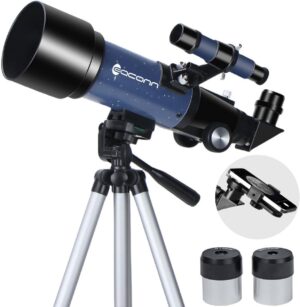
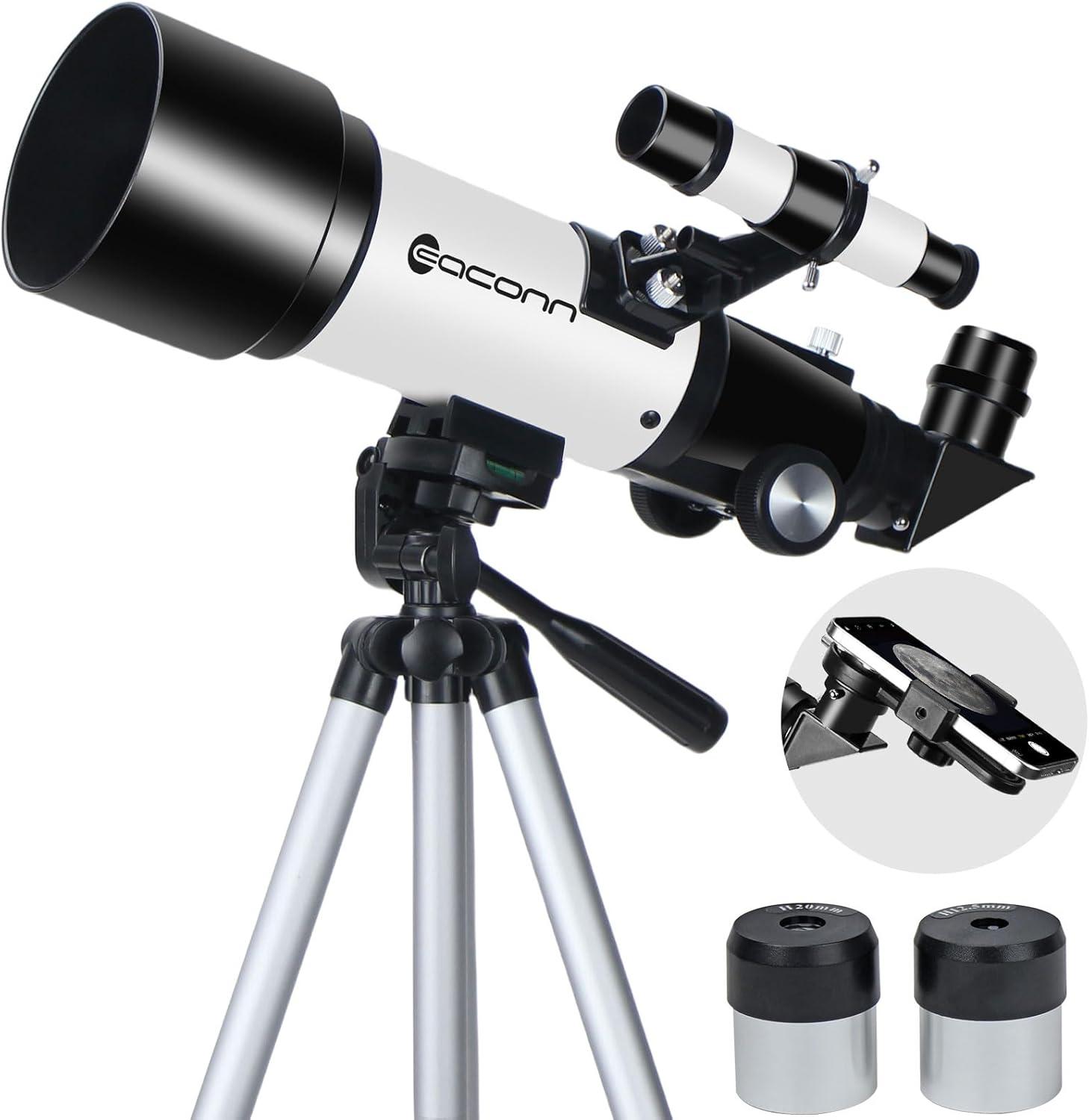
When we first unboxed this compact white refractor - a “Telescopes, Telescope for Kids and Adults Beginners” model with a 70mm aperture and 400mm focal length – we weren’t expecting to take home a full-on stargazing kit, but that’s essentially what arrived. Lightweight, travel-ready and aimed squarely at beginners and children, it pairs two interchangeable eyepieces (12.5mm and 20mm) for roughly 32x and 20x magnification, a 5×24 crosshair viewfinder to help zero in on targets, and a custom phone adapter that lets us line up our smartphone camera for quick snaps. the fully coated 70mm objective glass promises clearer, brighter images of the Moon and landscapes, and the adjustable aluminum tripod (12″-38″) makes it easy to swap between sitting-on-the-porch and standing-in-the-park setups.
In practice, assembly was straightforward and tool-free, and the telescope’s modest size makes it an inviting introduction to astronomy for kids without overwhelming parents. over a few evenings we used it to scope lunar craters, track a bright planet, and frame distant treelines, and we managed to get shareable photos using the phone adapter – not pro-level astrophotography, but plenty rewarding for a first-time setup. The real selling point is how accessible it makes observing: it’s a simple, affordable gateway to family stargazing and travel-pleasant landscape viewing.
In the sections that follow, we’ll walk through the optics and image quality, how the mount and tripod hold up, the phone-adapter experience, and whether this kit is truly the right starter telescope for kids and beginners. If you’re weighing something portable and user-friendly for your first night under the stars, read on – we’ll share what worked for us and what to watch out for.
Our Overview of the Compact Travel Refractor for Beginners
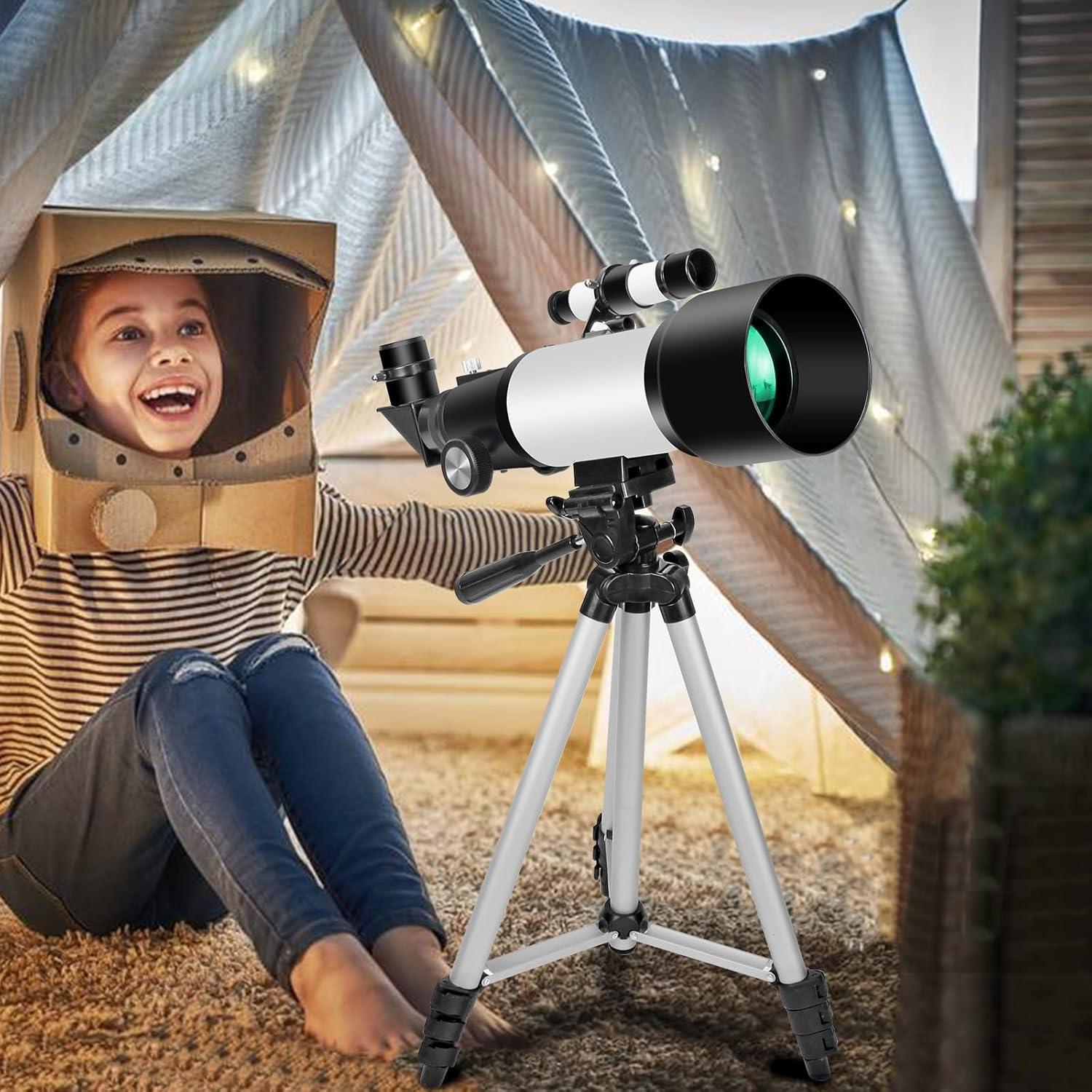
We found this compact refractor to be an excellent entry-level travel scope for curious families and beginners. Its 70mm objective and 400mm focal length, paired with fully coated glass elements, deliver surprisingly clear, sharp views of the Moon and terrestrial scenes. The kit includes two interchangeable eyepieces (12.5mm and 20mm) enabling 20x-32x magnification, and a 5×24 viewfinder with crosshairs that makes target acquisition straightforward. A custom phone adapter lets us freely adjust our phone’s camera focus to capture and share memorable shots, which is a big plus for kids and casual astrophotographers alike.
Setup and portability are standout points: the lightweight aluminum tripod adjusts from 12″ to 38″ without tools, so we can switch quickly between tabletop and full-height observing; it’s ideal for backyard stargazing or taking on short trips. Below are the quick highlights we liked:
- Optics: 70mm / 400mm, fully coated
- Eyepieces: 12.5mm & 20mm (20x-32x)
- Finder: 5×24 with crosshairs
- Extras: Phone adapter, adjustable tripod, tool-free assembly
| Eyepiece | Approx. Magnification |
|---|---|
| 20mm | 20x |
| 12.5mm | 32x |
If you’re looking for an affordable,travel-friendly scope that balances ease of use with useful photographic features,we recommend giving it a try – especially as a gift for beginners. See current price and buy now on Amazon
Features That Stood Out When We Took It Outdoors
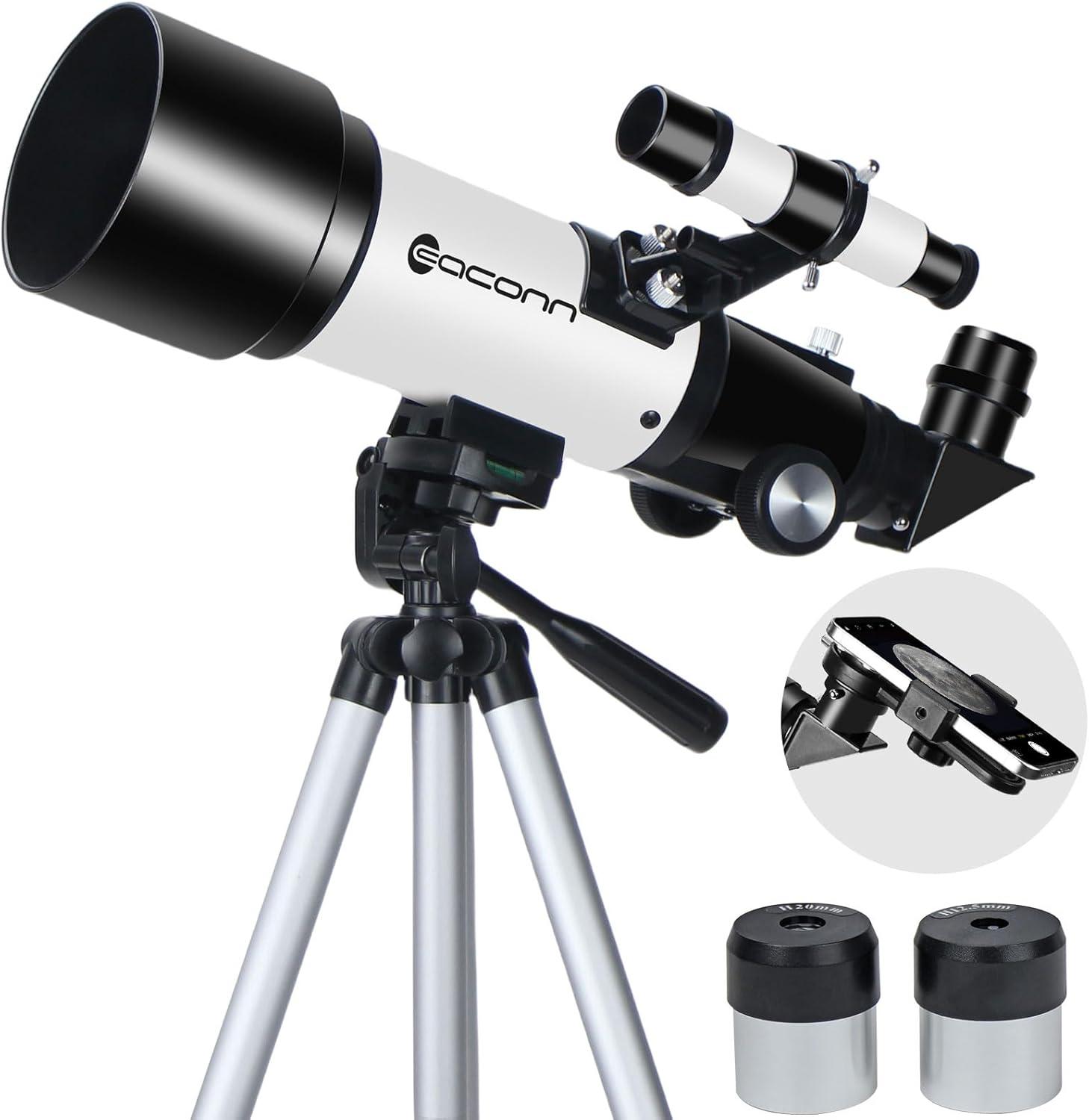
When we set it up under an open sky the optics instantly impressed us: the 70mm objective paired with a 400mm focal length and high-transmittance, fully coated glass delivered crisp, clear images of the moon and nearby landscapes. Swapping between the 12.5mm and 20mm eyepieces gave us usable magnifications from 20x to 32x, so we could enjoy wide-field scenes and then zoom in for lunar detail without fumbling. The 5×24 viewfinder with crosshairs made target acquisition effortless even at dusk, and the custom phone adapter let us capture and share those sharp shots with friends-adjusting the phone’s focus was a breeze, and the results looked surprisingly professional for a beginner setup.
Out in the field the lightweight build and tool-free assembly where huge pluses: the adjustable aluminum-alloy tripod extends from 12″ to 38″, so we found comfortable viewing positions whether we were seated on a picnic blanket or standing by the car. Our hands-on highlights included:
- Portable setup - quick to assemble and pack for travel.
- Flexible magnification – easy swap of eyepieces for different targets.
- Phone-ready – the adapter made sharing observations simple.
- Beginner-friendly – stable AZ mount and intuitive adjustments.
Below is a quick reference we used while scouting observation spots:
| Feature | Outdoor Impact |
|---|---|
| 70mm Objective | Bright, detailed views |
| 400mm Focal Length | Good balance of reach and stability |
| Tripod 12″-38″ | Comfortable for adults & kids |
| Phone Adapter | Easy astrophotography on the go |
See current price & capture your next view
Detailed Insights and Our recommendations for Moon Gazing and Landscape Viewing
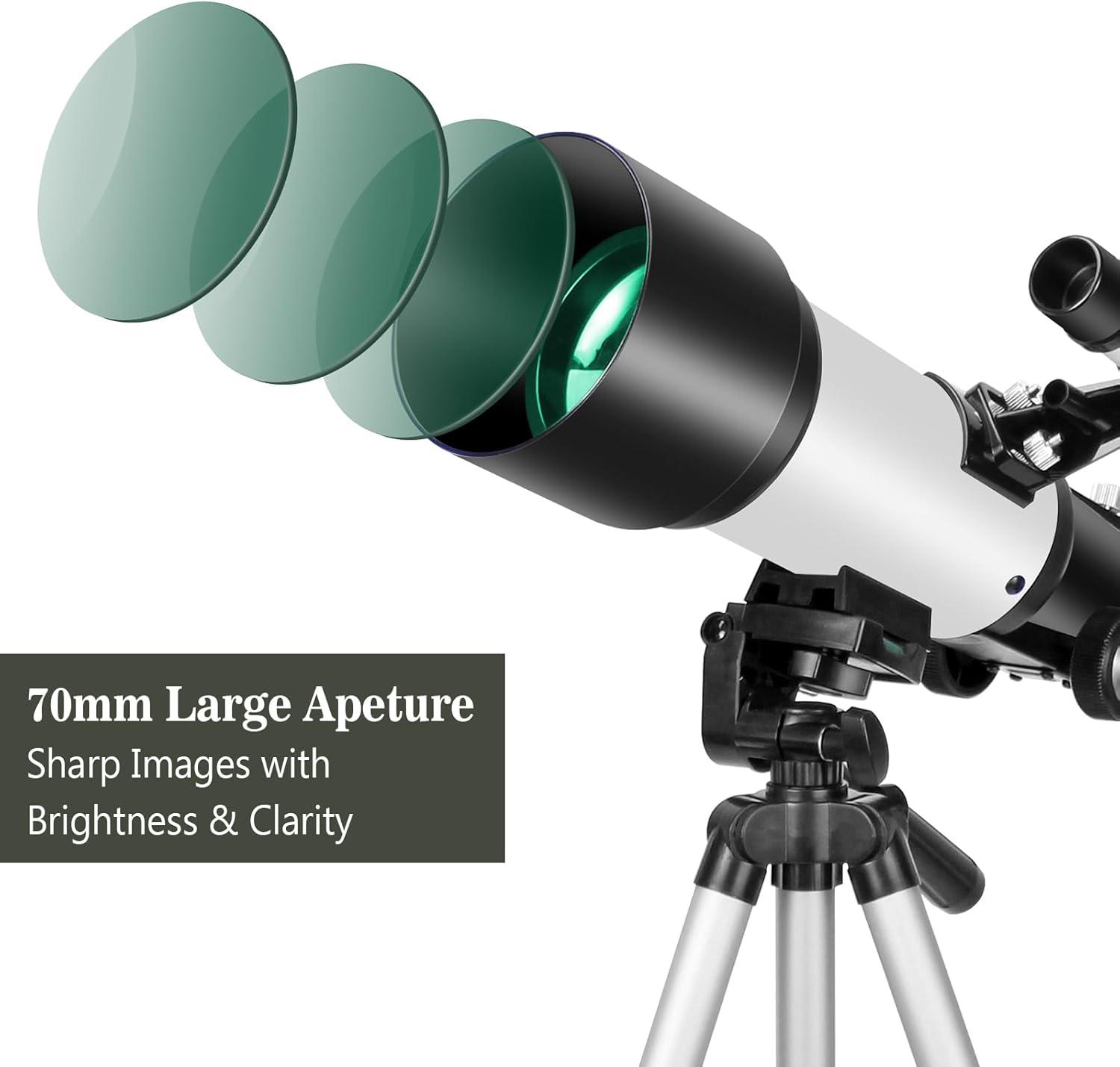
We found the optical package to be surprisingly capable for casual moon gazing and scenic observation: the 70mm objective combined with a 400mm focal length and fully coated glass elements delivers clear,contrasty views that highlight lunar craters and landscape details. Swapping between the included 12.5mm and 20mm eyepieces gives us usable magnifications from 20x to 32x, and the 5×24 viewfinder with crosshairs makes target acquisition straightforward – especially helpful when introducing kids to the sky. The custom phone adapter is a genuine plus for sharing; with a little patience adjusting the phone’s focus we captured crisp images to send to friends. Setup is fuss-free thanks to the adjustable aluminum-alloy tripod (12″-38″),so we could move from a living-room window to a roadside viewpoint without tools or headache.
- Best for: Lunar detail, parks and coastal panoramas, family outings.
- Portability: Lightweight travel-ready design and quick assembly.
- Limitations: Not intended for deep-sky observing or high-magnification planetary work.
- Extras: phone adapter and simple customer support make this friendly for beginners.
For practical use, we recommend the 20mm eyepiece for steady, wide landscape shots and easy framing, and the 12.5mm when we want a closer look at lunar features-pair that with a low atmospheric-haze night for the best moon detail. Keep the tripod low and stable for prolonged viewing sessions and use the viewfinder crosshairs to center targets before fine-tuning with the eyepiece. Below is a quick-spec reference we kept handy while testing:
| Feature | Quick Note |
|---|---|
| Aperture | 70 mm – bright for the class |
| Focal Length | 400 mm – balanced reach |
| Eyepieces | 12.5 mm & 20 mm |
| Tripod | 12″-38″ adjustable |
| Extras | Phone adapter, 5×24 viewfinder |
If you’re looking to start observing with minimal fuss and shareable results, give it a try – we think it’s an excellent starter option. See current price and buy on Amazon
Pros & Cons
Pros & Cons
After spending time with this 70mm travel refractor, we can clearly see why it’s a favorite for families and beginners. Below we lay out the strengths that make it fun and accessible, and the trade-offs you should expect as you grow into more serious observing.
Pros
- User-friendly for beginners: We found setup straightforward – tool-free assembly and an AZ (alt-azimuth) mount make first nights under the stars smooth and frustration-free.
- Good optics for the price: The 70mm aperture and fully coated glass give clear, sharp views of the Moon and terrestrial scenes; the 400mm focal length balances magnification and ease of use.
- Two eyepieces included: With 12.5mm and 20mm eyepieces we get roughly 20x-32x magnification out of the box, enough for lunar craters and planet spotting.
- phone adapter for sharing: We liked the custom phone adapter – it makes snapping and sharing lunar photos quick and family-friendly.
- Travel- and kid-friendly: Lightweight tube, compact size, and an adjustable tripod (12″-38″) make it easy to take on trips or hand to curious kids.
- Helpful viewfinder: The 5×24 finder with crosshairs speeds target acquisition so we spend more time observing and less time hunting targets.
Cons
- Limited aperture for deep-sky: We didn’t expect bright views of faint nebulae or galaxies - 70mm is best suited to the moon, planets, and landscapes.
- Modest magnification ceiling: While the included eyepieces are fine for beginners, they cap usable magnification; we’d add a higher-quality eyepiece or Barlow later.
- Basic mount stability: The lightweight AZ mount and compact tripod can wobble at higher magnifications, especially on rough ground or when kids bump it.
- Possible chromatic aberration: As a small refractor, we noticed slight color fringing on bright objects at the edge of the field in some lighting conditions.
- Accessory limits: The kit is generous for starters but lacks advanced extras (filters, carrying case, or an equatorial mount) that enthusiasts may want soon.
We think this telescope is an excellent entry-level choice for families who want an easy, portable way to introduce kids to astronomy. It won’t replace a larger amateur instrument, but for moonlit backyard sessions and travel-friendly stargazing it delivers great value.
| Quick Wins | Trade-offs |
|---|---|
| Portable 70mm refractor – easy to carry | Not optimized for faint deep‑sky targets |
| Phone adapter for quick photos | Tripod/mount is basic at high magnifications |
| Two eyepieces included (20x-32x) | Limited long‑term upgrade path without extras |
Q&A
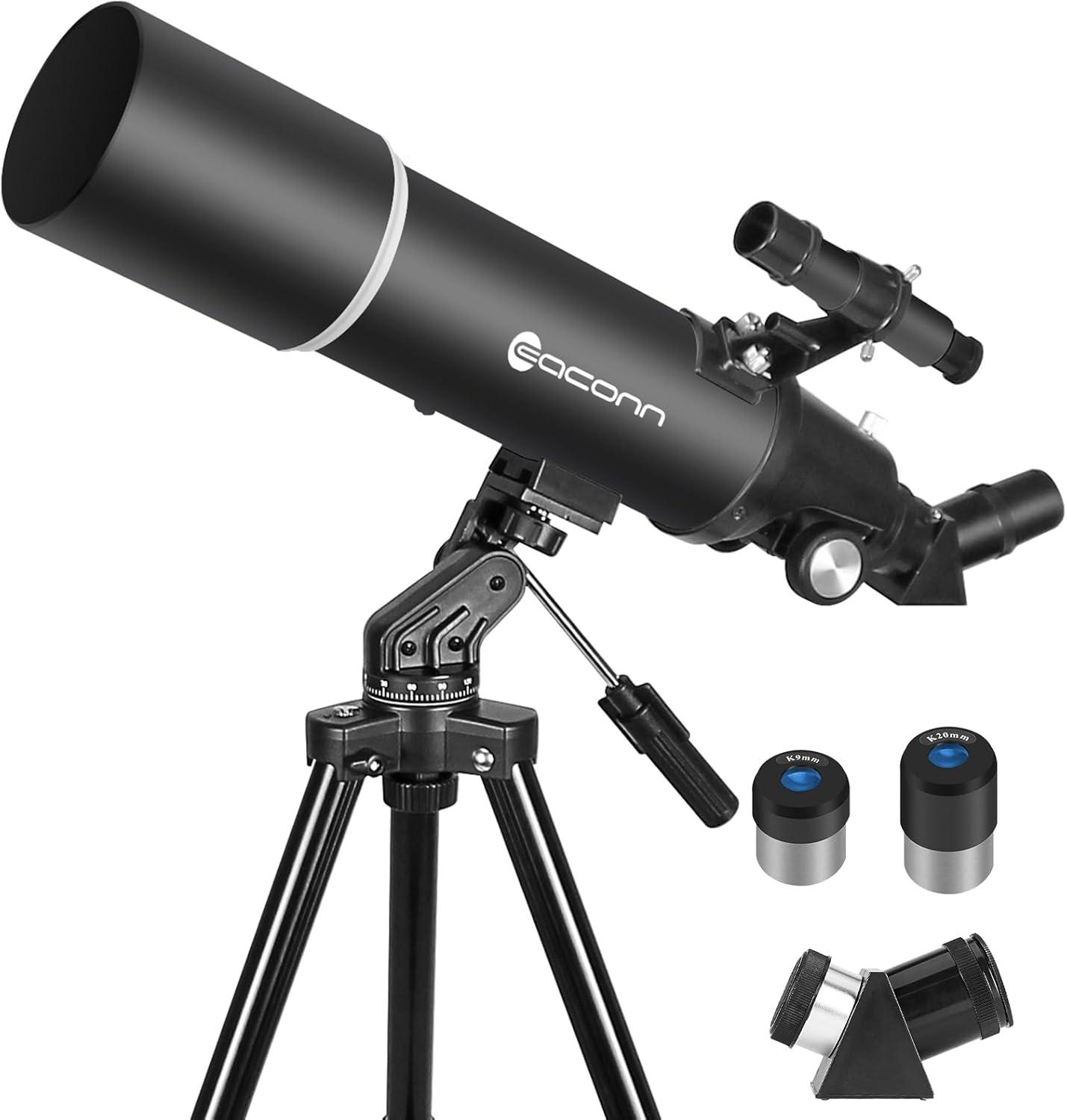
We get a lot of the same questions from families and beginners, so we put together this quick Q&A to help you decide whether this 70mm travel telescope is right for your household stargazing adventures.
Q: Who is this telescope best suited for?
A: We see this as a true family/beginner kit. It’s aimed at kids and adults who want an easy-to-use,portable refractor for the Moon,bright planets,star clusters and daytime landscapes. If you’re a complete beginner or buying a first telescope for a child, this model fits the bill.
Q: What are the optical specs and what do they mean for viewing?
A: The scope has a 70mm objective lens and a 400mm focal length with fully coated glass elements.That combination gives reasonably bright, sharp views of the moon, planets and terrestrial objects. It comes with 20mm and 12.5mm eyepieces, which provide about 20x and 32x magnification respectively (400 ÷ 20 = 20x; 400 ÷ 12.5 = 32x).
Q: Can we see planets and deep-sky objects?
A: We can comfortably see Moon craters and phases, and bright planets like Jupiter and Saturn (you’ll spot cloud bands and saturn’s rings as light features).as of the 70mm aperture, faint deep-sky objects (very dim nebulae and galaxies) will be challenging-this scope shines on the Moon, bright planets, open star clusters and daytime subjects.
Q: How easy is it to set up and use?
A: Setup is straightforward and tool-free. The telescope sits on an alt-azimuth (AZ) mount and an adjustable aluminum tripod that extends from about 12 inches to 38 inches. The mount and eyepieces are friendly for kids and beginners-point, center the object in the 5×24 finder with crosshairs, then refine focus.
Q: What about the viewfinder and alignment?
A: The included 5×24 viewfinder with crosshairs helps locate targets quickly. We recommend daytime alignment first: pick a distant object, center it in the main telescope, then adjust the finder so its crosshair matches. That makes night-time pointing much easier.
Q: Is it good for astrophotography with our phone?
A: The telescope includes a custom phone adapter that lets you adjust your phone camera to the eyepiece for photos. We’ve found it works well for basic lunar and landscape shots. For best results remove bulky phone cases, center your camera on the eyepiece, use the phone’s timer or a remote shutter, and keep the tripod steady. Don’t expect long-exposure deep-sky imaging-this setup is for snapshots and casual sharing.
Q: How stable is the tripod at full height?
A: The tripod raises to about 38 inches, which is convenient, but like most light travel tripods, it will be steadier at lower heights. We suggest lowering it a bit for higher magnifications or windy conditions and placing it on solid, level ground.Q: Are there any limitations we should know about?
A: Yes-70mm aperture limits light gathering compared with larger amateur telescopes, so very faint objects won’t be extraordinary. High magnifications beyond the included eyepieces will show more image wobble unless you upgrade to a sturdier mount. Also, some phones and thick cases can be tricky to clamp in the adapter-removing the case often resolves that.
Q: Is it safe for children to use?
A: We think so-this is designed as a family-friendly beginner scope. Still, we always recommend adult supervision for younger children. Never point the telescope at the Sun without a proper solar filter; doing so can cause permanent eye damage.
Q: What accessories should we consider buying?
A: Useful add-ons include a moon filter (for comfortable lunar viewing), a barlow lens or additional eyepieces for more magnification options, a small soft case for storage, and a phone adapter if you want better stability than the included clamp.A simple star chart or app will also make learning the sky more fun.Q: How do we care for the optics and maintain the telescope?
A: Keep lens caps on when not in use and store the scope in a dry place. Clean lenses only with a soft lens cloth or lens brush; avoid household cleaners. If the finder becomes misaligned, repeat the daytime alignment process. For persistent issues contact customer support.
Q: What if we have problems or questions after purchase?
A: The seller notes they provide timely customer service.If anything goes wrong, we recommend contacting the seller or retailer first-manny common issues are simple alignment or adapter adjustments.
If you have a specific concern-like whether your particular phone will fit the adapter, or how the scope performs from a light-polluted backyard-ask us and we’ll dig into it with hands-on tips.
Embody Excellence

We enjoyed how this compact refractor balances simplicity and capability: the 70mm objective and 400mm focal length deliver clear, sharp views of the Moon and nearby landscapes; the two eyepieces (12.5mm and 20mm) give family-friendly magnifications from about 20x to 32x; the 5×24 crosshair viewfinder makes locating targets straightforward; and the phone adapter plus adjustable tripod (12-38 in) turn casual evenings into shareable moments. It’s easy to set up, travel-friendly, and well suited as a first telescope for kids and adults learning the night sky.
If you’re after a dependable beginner instrument for lunar observing, backyard stargazing and scenic daytime viewing-without the complexity of advanced gear-this is a practical choice. We appreciate its thoughtful accessories and kid-friendly design, while keeping expectations realistic: it’s optimized for family fun and introductory astronomy rather than deep-sky research.
Ready to bring stargazing home? Explore the 70mm Travel Telescope on Amazon and start planning your next family night under the stars.


Reviews
There are no reviews yet.